Choosing your vacation
Cruise vs All-Inclusive: Which Vacation Style Fits You Better?

If you’re stuck between a cruise and an all-inclusive resort, you’re comparing two different kinds of easy vacation. The better choice is the one that fits your group’s pace—not the one with the longest list of amenities.
The short answer: lean toward a cruise for a moving home base and a mix of onboard time and port visits. Lean toward an all-inclusive for a fixed base and more control over each day. Both let you unpack once; neither automatically includes everything you will want.
This guide compares pace, food, kids, mobility, weather and extras before you commit. For help preparing the planning conversation, read How to Plan a Personalized Trip with a Travel Advisor.
What “all-inclusive” and “cruise” usually mean
An all-inclusive resort usually packages accommodation, meals, a selection of drinks and some activities at one property. You decide whether to stay there or add excursions. The specific property, room category and package determine what is included.
A cruise uses the ship as your hotel and transport between scheduled ports. Mainstream fares typically cover your cabin, designated dining and some entertainment; other experiences may cost extra. A sailing can include sea days, and a scheduled port is not a guaranteed stop.
Both reduce day-to-day planning. They solve different problems: a cruise organizes movement between places; a resort keeps your base in one place.
Pace and daily rhythm
Choose a cruise when you like variety without changing hotels. You can explore on a port day and return to the same cabin, or stay aboard. But arrival windows and all-aboard times shape the day. Missing a favorite port would need to be a disappointment you could live with—not the loss of the whole reason for your trip.
Choose an all-inclusive when slow mornings, repeat visits to a favorite pool and flexible rest time sound appealing. You still may need dining reservations or timed activities, but there is no ship departure to plan around.
Neither style is automatically more relaxing. Ask: would a free afternoon with nothing scheduled feel restful or boring? Would a different stop tomorrow feel exciting or tiring?
Food, drink, and “is it really included?”
Do not compare the labels alone. Compare the written inclusions of the actual sailing and resort package.
For example, Royal Caribbean’s fare guide distinguishes included dining and entertainment from optional beverage packages, specialty restaurants, excursions, Wi-Fi and spa treatments. That is one operator’s model, not a rule for every cruise.
On the resort side, Beaches’ inclusion guide lists dining, drinks and children’s programming among its inclusions. Other properties and packages differ. A resort’s “all-inclusive” label alone does not establish which restaurants, premium drinks or services your booking covers.
Practical takeaway: list your actual must-haves—specialty coffee, dietary accommodations, late dinners, children’s menus, a particular drink selection. Ask what is included, what needs a reservation, and what carries a supplement. For dietary needs, get the supplier’s process confirmed before booking rather than assuming a buffet solves the problem.
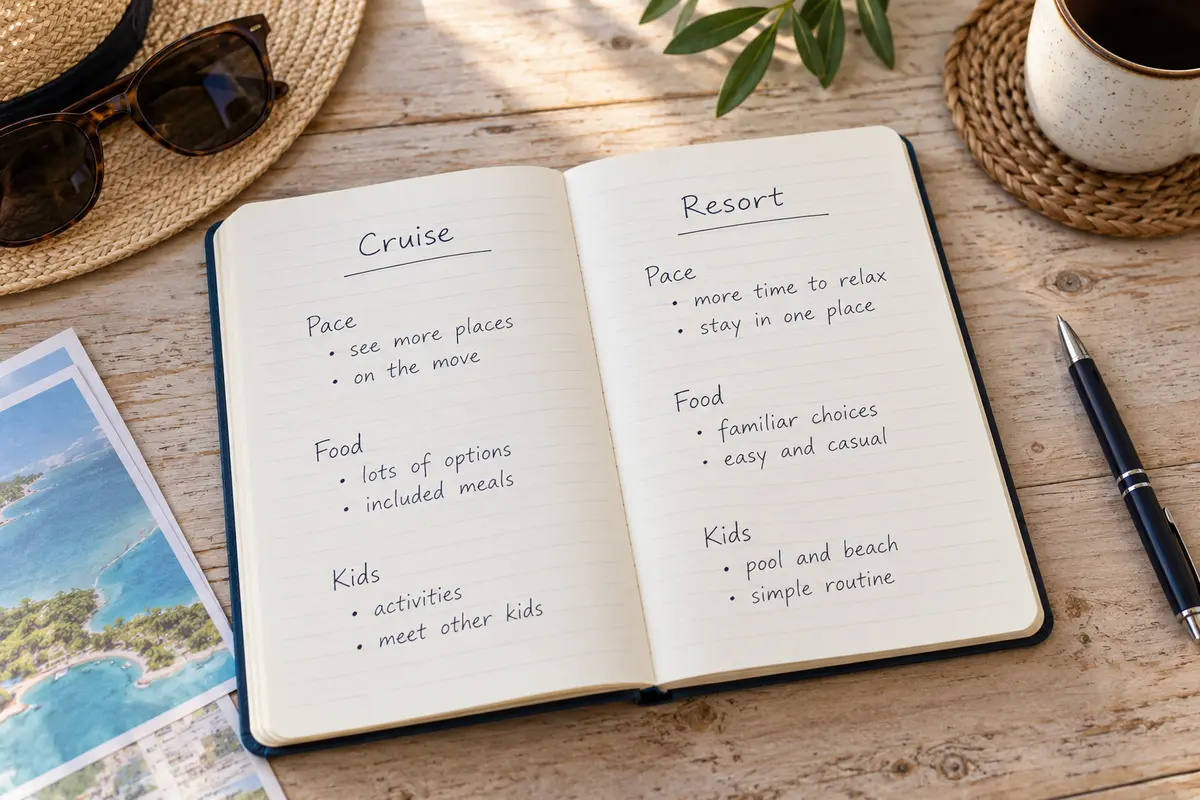
Kids, groups, and different energy levels
Cruises can suit mixed-age groups who want different activities and an agreed dinner meetup. Family resorts can work equally well when beach time, naps and familiar daily routines are the priorities. Neither format guarantees a suitable children’s program.
Before choosing, check the exact ship or resort’s age bands, operating hours, registration requirements, supervision, accessibility and any extra charges. “Children welcome” is not the same as supervised care, and adult-only properties will not fit a family traveling with children.
If half the group wants nightlife and half wants early quiet, compare room location and noise exposure—not just the entertainment list.
Two hypothetical groups, two sensible choices
A family with a regular afternoon nap: a compact resort with a room close to daytime activities may fit better than a port-heavy sailing. The deciding factor is easy access to rest, not simply “resort versus ship.”
A mixed-age group that enjoys splitting up: a cruise with suitable onboard activities and manageable port days may fit well. A large resort with the right facilities could also work. Agree on how often everyone expects to be together before comparing options.
Mobility, packing, and logistics
Neither option is automatically easier for someone with limited mobility. Large resorts can have long paths, slopes and distant rooms; large ships can involve long corridors and crowded elevators.
- For a cruise: confirm cabin and bathroom access, embarkation arrangements, walking distances, accessible excursions and how each port is reached. A tender is a smaller boat between ship and shore; do not assume it can accommodate every mobility device or transfer need.
- For a resort: confirm step-free routes from the specific room category to dining and activities, bathroom features, beach or pool access, and suitable airport transportation.
- For either: consider sensory needs, heat, rest breaks, luggage handling and the whole journey—not just the accommodation.
As one supplier-specific example, Royal Caribbean’s assistance guidance addresses advance arrangements for accessible transfers and checking tender capability. Ask for confirmation for your particular itinerary and equipment before committing.
Both styles allow you to unpack once. Pack for your actual activities, dress requirements and expected conditions rather than assuming every cruise is formal or every resort is beachwear-only.
Weather, seasickness, and “what if plans change?”
A cruise itinerary can change; being on a moving ship also matters if motion is a major concern. A resort stays in one location, so bad beach weather may put more weight on indoor options. Neither a ship’s alternative activities nor a resort’s facilities guarantee the day you originally pictured.
Before paying a deposit, review change and cancellation terms, transportation contingencies and the help available through the supplier and your advisor. Ask what support covers and how to reach it; do not assume unlimited availability. If motion sensitivity could rule out a cruise for you, factor that into the choice early.
Hidden extras that change the feel
Some extras are clearly disclosed but easy to overlook in an initial comparison. Check whether your chosen package includes each item, then mark it “included,” “extra” or “not needed”:
- Drinks, specialty coffee and premium dining
- Wi-Fi, gratuities and service charges
- Excursions, paid activities and spa visits
- Flights, baggage, seat selection and airport or port transfers
- A pre-trip hotel night, if your transport plan calls for one
- Travel protection and other optional add-ons
Compare the same travelers, dates, trip length and must-haves. A simpler headline offer can become a more complicated vacation if you will keep purchasing the experiences you actually wanted.
A simple decision checklist
- Do we want one destination as our base, or a moving base with several scheduled stops?
- Would port return times help structure our day or make it stressful?
- How easily can everyone reach their room for a rest?
- Does the specific ship or resort suit the children’s ages and the group’s accessibility needs?
- Which dining, connectivity and activity extras will we actually use?
- Would we still enjoy the trip if beach weather or a planned port changed?
If your answers conflict, choose your top three priorities and one deal-breaker. Compare each specific option against those four things. Do not let ten minor amenities outweigh the one issue that could spoil your trip.

How a travel advisor helps with this choice
A useful planning conversation turns your priorities into a focused shortlist, checks inclusion gaps, and compares the transportation and booking conditions that matter to your group. It should also clarify what the advisor handles, any fees, and what remains your responsibility.
AI can help organize ideas, but it is not proof of a current amenity, accessible room or available cabin. Those details need checking with current supplier information for your dates. This article is a decision guide, not a live inventory or booking feed.
How Vayriva can help you start
Bring Casie Keller your travelers, rough dates, top three priorities and any deal-breaker. Whether you are choosing between a cruise and an all-inclusive or narrowing an existing preference, those details give the planning conversation a useful starting point.
Independent Affiliate of Atlas Coast Travel Group
Ready to compare options around your people and pace?